Chernobyl: The Human Cost of the Silence
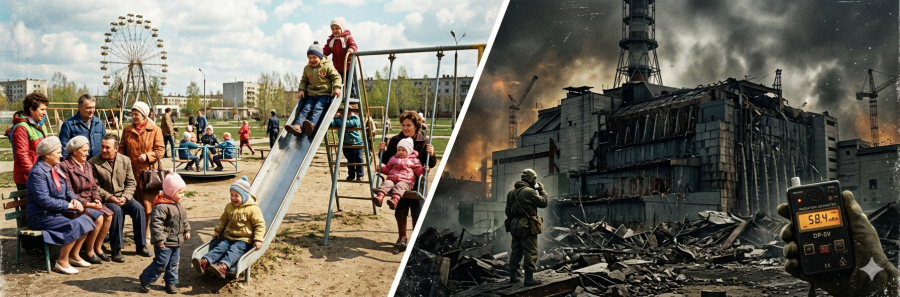
A dawn like any other in the eyes of Pripyat’s residents—yet unlike any that had come before—broke in the early hours of April 26, 1986. Children headed to school, workers prepared for their shifts, and everyone went about their routines, unaware they were being exposed to a hazard originating just 3 km from the city.
During the night, Reactor 4 of the Chernobyl nuclear power plant suffered a catastrophic accident and exploded, exposing its core to the open air and sending radioactive plumes billowing across the region.
However, the residents were not evacuated that morning. Children remained in class, and despite the news of an explosion, the event did not alarm local families in the way we would understand today.
Authorities dispatched firefighting crews to contain the blaze—about 30 men in the initial hours. They fought the fire amidst staggering levels of radiation, completely unaware of what they were facing. Most would die in the following weeks due to exposure.
Following the firefighters, soldiers were sent in to clear the grounds and the plant’s rooftops, removing radioactive graphite from surfaces—often without adequate protection. They were also tasked with burying debris, removing layers of topsoil, and assisting in the evacuation.
And so April 26 came to an end: makeshift operations to contain the damage, workers exposed to extreme radiation levels, and residents left unalerted, without the urgent evacuation the situation demanded.
While the root cause of the disaster involved technical failures, that is not the most striking point. Failures happen. What transformed the accident into a human catastrophe were the decisions made in the hours and days that followed—decisions that prioritized political optics over human lives.
The Initial Silence
In the early hours, authorities handled the crisis with negligence. They failed to recognize the severity of the situation, acting in an imprudent and inefficient manner.
As time passed, the facts became undeniable and the situation grew increasingly perilous. With the reactor breached and releasing radioactive material, one of the greatest risks was the core making contact with the groundwater, which could have contaminated the water supply for dozens of kilometers and compromised the other reactors.
Heavy machinery was used to remove contaminated sediment, but many units failed due to the intense radiation. Consequently, soldiers were forced to perform the work manually, rotating in short intervals to limit their exposure.
Helicopters flew over the open reactor to drop sand and suppress the dispersion of radioactive material. The pilots operated under extreme radiation levels; many developed severe health issues, with several passing away weeks later.
The Delayed Evacuation
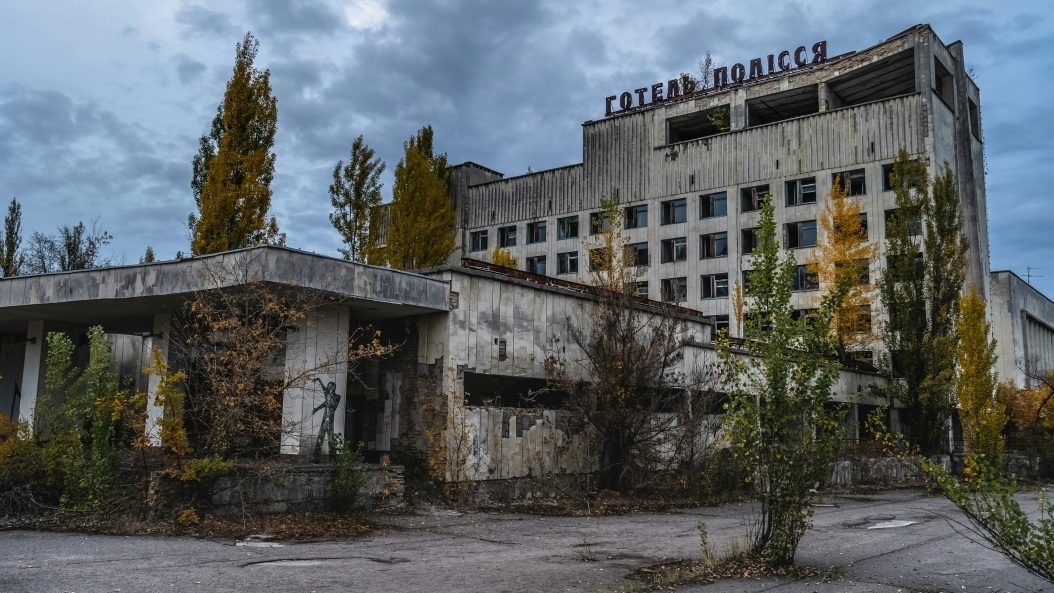
It took approximately 36 hours for the residents of Pripyat to be evacuated—leaving behind their homes and belongings, never to return. The site became a ghost town, its structures contaminated and radiation levels remaining dangerous to this day.
But the effects of these decisions were not limited to the abandonment of the city or the immediate aftermath. They unfolded over years, directly and indirectly affecting tens of thousands of people.
 Pripyat, Oblast’ di Kiev, Ucrânia
The Human Impact
The human toll of the Chernobyl disaster is vast, prolonged, and, in many respects, impossible to measure with absolute precision. Decades later, significant discrepancies remain between official estimates and independent studies. Even so, certain figures help illustrate the scale of the tragedy.
In the initial hours and days following the explosion, about 600 workers and firefighters were exposed to extremely high levels of radiation. Of these, 134 developed Acute Radiation Syndrome (ARS), a severe condition that rapidly compromises vital organs. Twenty-eight died within 1986, in the weeks immediately following the accident.
These are the most immediate figures—and the least controversial.
Over the ensuing years, the impact becomes more diffuse and harder to attribute directly. Reports from organizations such as the World Health Organization (WHO) and the International Atomic Energy Agency (IAEA) estimate that the number of additional radiation-related deaths could reach several thousand among the most exposed groups. Other studies, employing different methodologies, significantly expand this estimate, pointing toward tens of thousands of deaths over the decades.
This discrepancy is not trivial—it reveals how the effects of a nuclear disaster can dissipate over time, becoming statistically difficult to isolate and, therefore, easier to dispute.
Among the most evident and widely accepted effects is the spike in thyroid cancer cases, particularly among children and adolescents exposed to radiation in Ukraine, Belarus, and parts of Russia. Thousands of cases were recorded over the years, primarily linked to the ingestion of contaminated food, such as milk containing radioactive iodine.
But the human impact is not limited to physical illness.
Approximately 116,000 people were evacuated in 1986, a number that would eventually grow to roughly 350,000 displaced persons over the years. Entire communities ceased to exist. Homes, schools, personal belongings—everything was abandoned, often with little warning and no hope of return.
Beyond material losses, the psychological effects were profound. Forced displacement, the stigma of being “contaminated,” and constant uncertainty regarding one’s health contributed to an increase in anxiety, depression, and other mental health disorders among those affected.
Unlike immediate disasters, the impact of Chernobyl did not end at the moment of the explosion. It spans decades, silent and unequal—affecting not only those who were present but also subsequent generations.
More Than a Technical Error
The technical failure that triggered the accident resulted from a combination of design flaws, ill-defined processes, and decisions that bypassed safety protocols.
The team involved in the test consisted of about 15 people. The reactor was already operating in an unstable state after hours of running at an inadequate power level. Some operators warned their superiors, yet the test proceeded.
In an attempt to stabilize the system, protocols were breached, increasing the concern among the staff. Even so, the orders were clear: proceed.
Automatic safety systems were deactivated to facilitate the test.
Why didn’t the operators stop the process?
- The Soviet hierarchical culture made it difficult to question orders.
- Deputy Chief Engineer Anatoly Dyatlov pressured the team to complete the test.
- The real risk was underestimated—the reactor’s extreme behavior was not fully understood.
When the instability reached a point of no return, a design flaw triggered the explosion. Even after the fact, the initial reactions pointed to an underestimation of the event. It was believed to be merely a fire until the release of radioactive material was confirmed.
The Logic of the Cover-Up
With the reactor open and venting radiation, a sequence of decisions began that worsened the situation.
The preservation of the Soviet Union’s image, both internally and externally, was prioritized over an immediate emergency response.
The world only learned of the accident two days later, on April 28, when workers at a nuclear power plant in Sweden triggered radiation alarms. After analysis, it was concluded that the contamination originated from elsewhere.
Other European countries detected abnormal levels and, through triangulation, identified the source in the Chernobyl region.
Only under international pressure did the Soviet government acknowledge the accident, and even then, they downplayed its severity.
Acknowledging a disaster too early has a political cost. Acknowledging it too late transfers that cost to the population.
The residents of Pripyat remained unnecessarily exposed for over a day. The workers who responded to the emergency faced extreme risks without informed consent.
Diluted Responsibility
The rigid hierarchy amplified the underestimation of the problem. Operators followed orders against protocol, firefighters acted without knowledge of the risks, and soldiers performed hazardous tasks.
At every level, individuals were exposed without access to the information necessary to make a choice.
High-impact decisions emerged from a chain of command where each link possessed only fragments of the reality.
 Chernobyl, Kyiv Oblast, Ukraine
Conclusion
The image of Pripyat continuing its routine after a nuclear disaster exposes the chasm between consistency and convenience that exists in the relationship between the governors and the governed.
Chernobyl was not merely an engineering failure. It was a catastrophe magnified by the centralization of power and information in the hands of individuals who appeared to disregard the sanctity of human life.
When the truth could no longer be denied, it was delayed—preserving political interests while the cost fell upon tens of thousands of people.
References
-
United Nations Scientific Committee on the Effects of Atomic Radiation (UNSCEAR).
Sources and Effects of Ionizing Radiation – UNSCEAR 2008 Report, Annexes.
https://www.unscear.org/unscear/en/publications/2008_1.html -
World Health Organization (WHO).
Health effects of the Chernobyl accident and special health care programmes (2006)
https://www.who.int/publications/i/item/9241594179 -
Svetlana Alexievich.
Voices from Chernobyl (2016)
