Hiroshima and the Manhattan Project: science, war, and moral responsibility
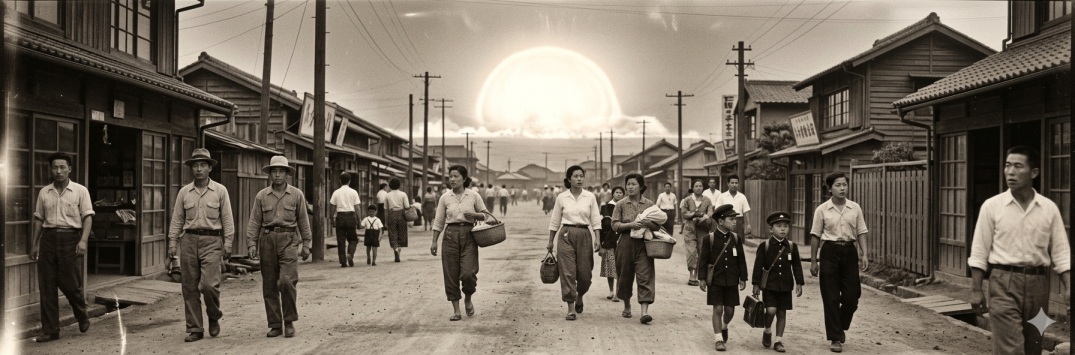
The heat already began early on another ordinary Monday morning in Japan.
In a small wooden house, a mother folded clothes still warm from the clothesline, while the father adjusted his uniform before leaving for work. The war had already changed many things—food was scarce and there was a constant fear of air raids—but life still had to continue.
Children were getting ready for school, and many were already out on the streets that morning.
Trams crossed the city.
Bicycles moved across bridges.
Shopkeepers lifted the wooden shutters of small stores.
At 8:15 a.m., some people looked up at the sky after hearing the distant sound of an aircraft.
Then came the flash.
Survivors would later describe it as “a second sun.” A bluish-white light passed through windows, streets, and bodies in a fraction of a second.
The heat arrived before the sound.
Exposed skin burned instantly. The shadows of people were etched into walls and stairs by the thermal flash.
Then came the shockwave.
Houses collapsed inward. Roofs were torn away. Glass sliced through bodies like blades. A violent wind swept through the streets with devastating force.
Only afterward came the sound.
A deep, thunderous blast unlike anything previously known.
Within seconds, the city disappeared into fire, dust, and silence.
Tens of thousands died without even understanding what had happened.
Others rose burned, blind, covered in blood and ash, wandering aimlessly through streets that no longer existed.
Hiroshima had ceased to exist as a city in less than a minute.
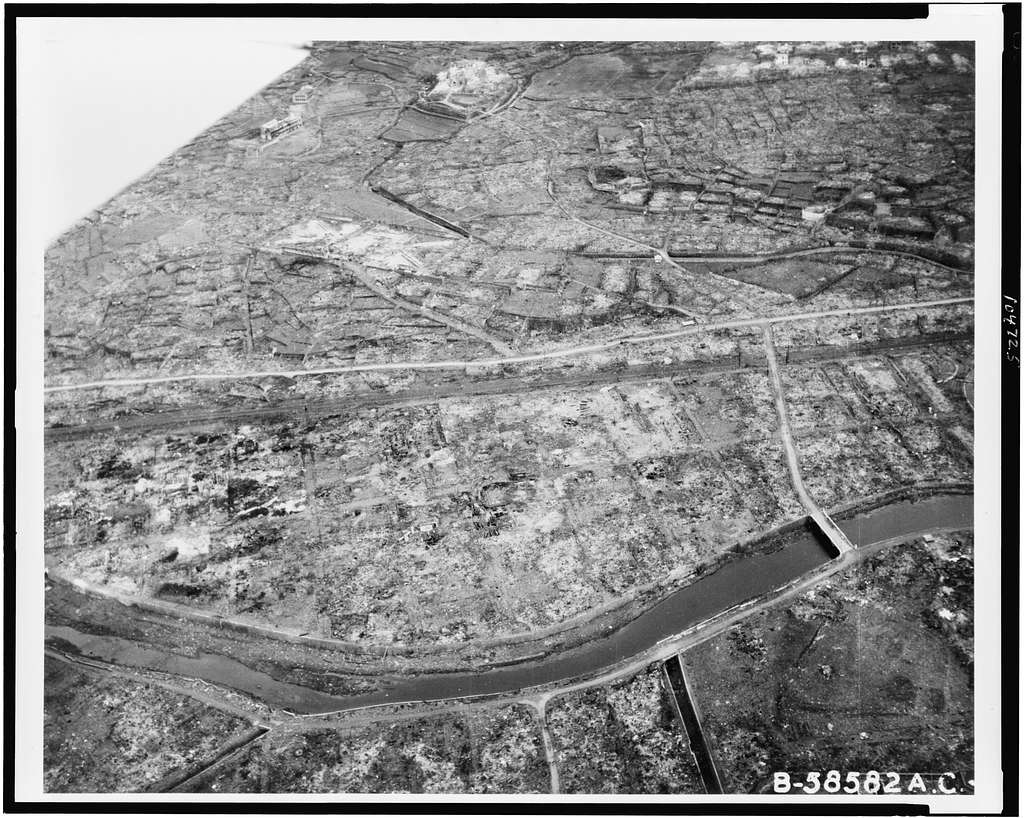 Aerial view of Hiroshima after the explosion
The Manhattan Project
The project was created in 1942 out of fear that Nazi Germany might develop an atomic bomb before the United States.
European physicists had discovered nuclear fission, the process in which an atomic nucleus is split, releasing an enormous amount of energy.
In 1939, Albert Einstein warned the U.S. government about the risk of Nazi Germany advancing this technology.
In total, it is estimated that more than 100,000 people were directly or indirectly involved in the project.
Industrial complexes and entire towns were built for the production of enriched uranium, plutonium, calculations, and nuclear testing.
Most workers had no full understanding of the final objective, operating under a compartmentalized structure similar to large-scale industrial models. Only top-level scientists and military officials had a complete view of the project.
Among the main figures were Robert Oppenheimer, Leslie Groves, Enrico Fermi, Niels Bohr, and Richard Feynman.
Many of the scientists were European refugees who had fled Nazism. After realizing that Germany was far from building the bomb, some of them began to question the continuation of the project.
The estimated cost was about 2 billion dollars at the time (roughly 35 billion in today’s values), making it one of the most expensive military projects in history.
The Trinity nuclear test
The test took place on July 16, 1945, in the New Mexico desert, about 20 days before the Hiroshima attack.
The explosion illuminated the sky in an unprecedented way.
Oppenheimer later recalled a passage from the Bhagavad Gita:
“Now I have become Death, the destroyer of worlds.”
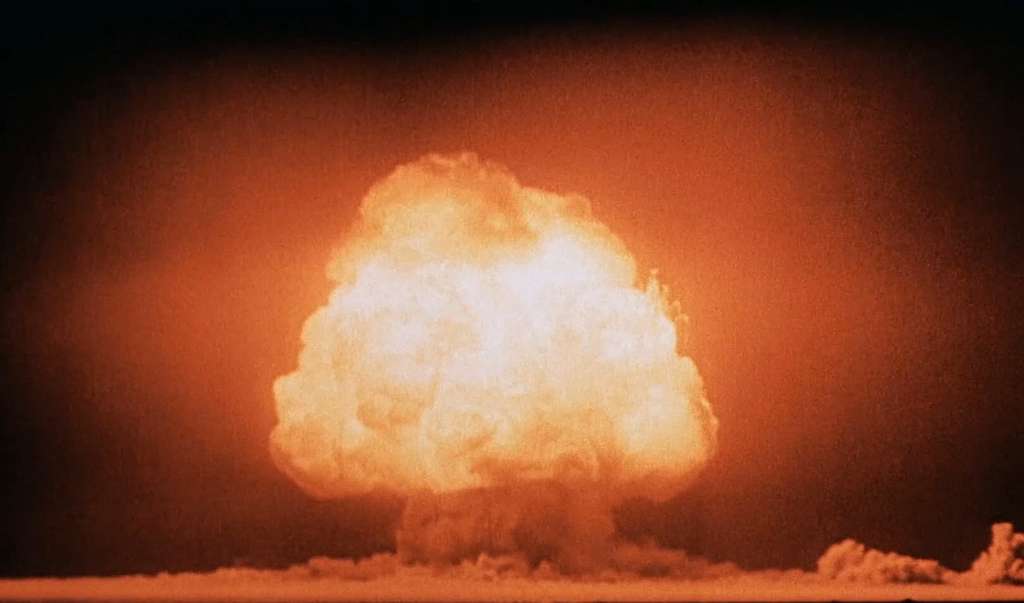 Mushroom cloud seconds after the explosion
The decision to use the bomb
With the success of the Manhattan Project, the United States government had to decide whether to use the weapon.
The final decision rested with President Harry S. Truman, without a public vote or direct congressional consultation.
Germany had already surrendered, and part of the scientific community, including Leo Szilard, opposed the use of the bomb against civilians.
Some proposed a demonstration in an uninhabited area, but this option was rejected, also due to geopolitical tensions with the Soviet Union.
Military estimates suggested that a conventional invasion of Japan could cost hundreds of thousands of American lives and potentially millions of Japanese lives.
Why Hiroshima and Nagasaki
The cities were selected by a specific committee within the Manhattan Project, known as the Target Committee.
The criteria included military value, industrial capacity, population density, and psychological impact.
Hiroshima hosted important military installations and logistical centers, and its geography was considered favorable for the bomb’s impact. However, it was densely populated, and thousands of families lived in the central area that was destroyed.
Nagasaki was a relevant industrial and port center. It was also a major population hub and notably the most Catholic city in Japan, a fact that raised questions among some critics regarding American intentions.
Both cities had been relatively spared from previous bombings, increasing the visual and psychological impact of their destruction.
Civilian casualties of the attacks
Military documents make it clear that planners understood the attacks would cause, at minimum, tens of thousands of civilian casualties.
The objective was to produce massive psychological shock and accelerate Japan’s surrender.
The strategy was not surgical but one of large-scale total destruction.
In essence, terror inflicted at the cost of civilian lives was used as a means to achieve the desired outcome. A logic not unlike that of terrorist groups around the world.
In Hiroshima, around 75,000 people died immediately. By the end of 1945, total deaths reached approximately 140,000.
In Nagasaki, around 40,000 died immediately, reaching approximately 70,000 in the same period.
In total, it is estimated that about 300,000 combined deaths occurred across both cities over time, including direct and indirect effects.
Survivors suffered severe radiation effects, including burns, nausea, fever, hair loss, bleeding, and general weakness.
In the following years, there was an increase in cancer, leukemia, cataracts, and other diseases associated with radiation exposure. Impacts on pregnant women were also recorded, including miscarriages and congenital malformations.
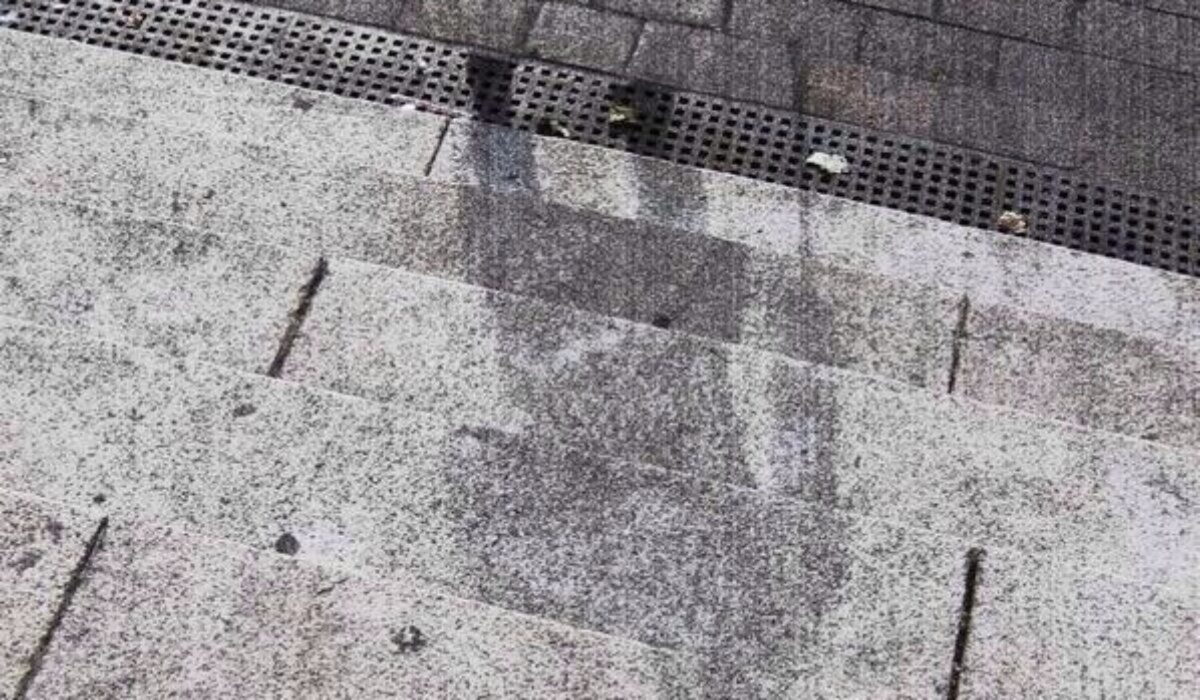 Shadow of a person created by the explosion’s flash
Conclusion
The development and use of atomic bombs during World War II remain one of the most controversial episodes in modern history.
The project was initially motivated by fear of a Nazi weapon, but continued even after Germany’s defeat, now justified by new strategic considerations.
The moral judgment of these decisions has, in a sense, become blurred over time. While other war crimes were widely prosecuted in international tribunals, the use of nuclear bombs did not undergo a comparable process.
There was no trial like Nuremberg; no one was convicted of war crimes. Hundreds of thousands of immediate civilian deaths, and many more in the aftermath, were not enough to generate a formal condemnation of the American actions.
Entire families living ordinary lives were erased in seconds because a decision was made that this was necessary—and, crucially, because there was no capacity for retaliation.
While wars have always been brutal and often immoral, in earlier times they were fought on battlefields, away from civilian populations. Many did not involve workers and family men on the front lines, as this role was typically reserved for professional soldiers who chose that path.
World War II began with the German Blitzkrieg, which fundamentally changed the dynamics of trench warfare and increased risks to civilian populations, and ended with two nuclear bombs that wiped out entire cities and their inhabitants, including women, children, the elderly, and the sick trying to survive the already devastating conditions in Japan.
Regardless of the calculations made before the deployment of the weapons, or predictions about the continuation of the war—none of it justifies what happened in this episode. Ordinary people paid with their lives, and with the lives of their families, for a debt that was not theirs.
References
- Encyclopaedia Britannica
https://www.britannica.com/event/atomic-bombings-of-Hiroshima-and-Nagasaki - Atomic Archive
https://www.atomicarchive.com/resources/documents/med/med_chp10.html
